
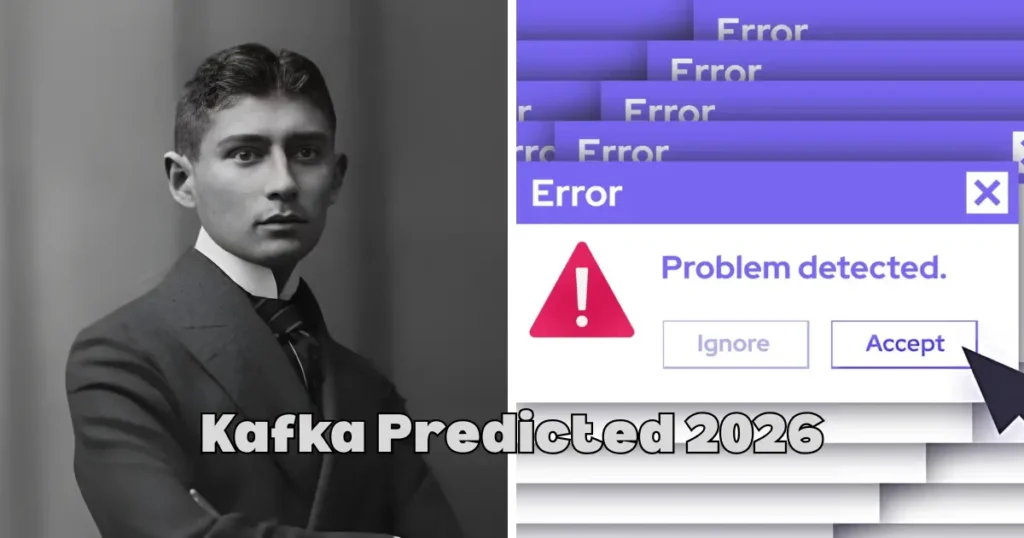
November, 1919. A sanatorium somewhere in the Austrian Alps. Franz Kafka, 36 years old and dying from tuberculosis, writes a 47-page letter to his father Hermann. He pours out everything—the fear, the shame, the wound that never healed. How Hermann’s domineering presence crushed him, made him feel worthless, turned every achievement into evidence of failure.
He gives the letter to his mother Julie to deliver. She never does. Hermann never reads it. The wound stays open.
Kafka dies five years later in 1924, convinced he’s failed at everything—failed as a son, failed as a fiancé (three broken engagements), failed as a writer (almost nothing published, the major novels unfinished). He leaves explicit instructions to his friend Max Brod: burn everything. All the manuscripts, all the stories, all of it. Let it disappear.
Max Brod faces an impossible choice. Obey his dying friend’s wish, or save what he knows is genius. He chooses betrayal. He publishes The Trial in 1925. Then The Castle. Then Amerika. The world discovers Kafka posthumously, and within decades his name becomes an adjective. “Kafkaesque” enters the language to describe the nightmares we’re all living—trapped in systems that make no sense, judged by criteria nobody will explain, transformed into something we don’t recognize while everyone treats it as normal.
And here’s the thing: Kafka matters more in 2026 than he did in 1924. Because we’re living in the world he predicted. Every algorithmic decision we can’t appeal. Every customer service loop that goes nowhere. Every form that asks for information it already has. Every time you’re denied for reasons the system won’t specify. That’s Kafka. He wrote the manual for modern helplessness before computers existed.
Why Kafka Hits Different in 2026
Kafka died before television, before computers, before the internet. But he wrote about our lives with eerie precision:
You call customer service about a credit card dispute. The chatbot can’t help. You ask for a human. The chatbot says it’s transferring you. You get another chatbot. You try again. Same loop. Nobody escalates. Nobody has authority to fix the problem. You’re Josef K. in The Trial—arrested for a crime nobody will name, appealing to courts that never explain their procedures.
Your health insurance algorithm denies your claim. The reason? “Not medically necessary.” You appeal. The appeal gets denied. You ask why. They cite the algorithm. You ask to see the algorithm’s reasoning. That’s proprietary. You’re in The Castle—perpetually denied entry, told there’s a process, but the process never resolves.
You apply for fifty jobs. All rejected, no feedback. You don’t know if it’s your resume, your background check, or an ATS system filtering keywords. You’re never told what you did wrong. You’re Gregor Samsa waking up transformed, unable to get answers about what happened or why.
Your Uber rating drops. You don’t know why. You can’t contest it. It affects your ability to get rides. One bad day, one passenger’s mood, and you’re marked. The system rates you, you can’t rate the system. That’s Kafka—judgment without appeal, powerlessness codified.
You’re laid off by email. Not by your manager—by an algorithm that determined your role was redundant. No exit interview. No explanation beyond “restructuring.” You’re eliminated through a process you never saw coming, just like Gregor Samsa’s transformation. One day you’re valuable, the next you’re not, and the change is absolute.
This is why Kafka keeps returning. Every generation thinks they’ve moved past him, that his bureaucratic nightmares are historical curiosities. Then systems get more complex, more algorithmic, more immune to human appeal. And we realize: Kafka was a realist.
Who This Helps (And What You’ll Learn)
This guide is for you if:
You’re intimidated by Kafka but know you should probably read him. Maybe you’ve heard he’s “difficult” or “depressing” or “doesn’t make sense.” You want someone to tell you straight: which books to read, in what order, and whether it’s worth it.
You started The Trial or The Castle and quit because it felt like homework. You’re not sure if the problem was you or the book. (Spoiler: probably the book’s pacing. Some Kafka is genuinely hard. I’ll tell you which works are accessible and which require commitment.)
You’ve read one Kafka story (probably The Metamorphosis in high school) and want to know what else exists. You’re curious but don’t know where to go next.
You’re building a literature education and recognize Kafka as foundational to modernism, existentialism, and basically everything that came after. You want comprehensive guidance, not just “read The Metamorphosis.”
You keep seeing “Kafkaesque” used online and want to understand the reference properly by reading the source material. You’re ready to go beyond the Wikipedia summary.
What you’ll get from this guide:
- Specific recommendations for where to start (with difficulty ratings and reading times)
- Four different reading paths based on your actual goals
- Translation advice for every major work (this matters more than you’d think)
- Biography that connects Kafka’s life to his fiction (the father-son wound runs through everything)
- Realistic expectations (what makes Kafka “difficult” and what doesn’t)
- Why this 1924 writer predicted 2026 better than anyone alive
Start Here: The Best Kafka Book for Beginners
The Metamorphosis (Die Verwandlung, 1915)
Difficulty: 2/5 | Reading Time: 2-3 hours
Start with The Metamorphosis. It’s 50-70 pages depending on translation, you can finish it in one sitting, and it contains everything Kafka does in longer works—transformation without explanation, family dysfunction, social judgment, feeling trapped in a body and life you don’t recognize—but in concentrated form.
The plot: Gregor Samsa wakes up one morning transformed into a giant insect (or vermin—translation debates aside, something bug-like and disgusting). That’s it. That’s the premise. No explanation how or why. His family’s horrified. He can’t work. He becomes a burden. The story tracks his isolation, his family’s resentment, and his slow extinction.
What makes it devastating isn’t the transformation itself—it’s how everyone treats it as Gregor’s fault. His family’s first concern isn’t “How can we help?” but “How will we pay rent?” His boss shows up angry about missed work, not concerned about the employee who’s become an insect. Gregor internalizes the judgment, feels guilty for being a burden, apologizes for existing. The Metamorphosis is about what happens when you stop being useful to the people around you.
Modern parallel: Getting laid off and feeling like you’ve personally failed, even when it’s a company decision that has nothing to do with your value. Or developing a chronic illness and sensing others’ patience wearing thin. Or burning out at work and feeling like the problem is you, not the system grinding you down.
Why start here: You’ll know immediately if Kafka’s style works for you. If you finish The Metamorphosis and feel recognition—”Oh, I’ve felt like this”—then read more Kafka. If you finish thinking “That was weird and depressing and I’m good,” you just saved yourself from starting The Trial.
Best translation: Susan Bernofsky (2014, Norton Critical Edition). She captures the dark humor others miss. Kafka’s funny in a bleak way—Gregor worrying about work performance while stuck on his back as a beetle is absurd and awful and somehow hilarious. Bernofsky gets this.
Alternative if you truly hate The Metamorphosis: Try “The Judgment” (30 minutes) or “Before the Law” (5 minutes) instead. “The Judgment” is the father-son story in pure form—brutal and short. “Before the Law” is a parable about waiting for permission that never comes. Both are less famous but equally Kafka.
Kafka Works by Reading Difficulty
Difficulty ratings reflect emotional intensity and conceptual complexity, not prose difficulty.
The Three Major Novels: What to Expect
The Trial (1914-1915, published 1925)
Difficulty: 4/5 | Reading Time: 10-14 hours
The Trial is Kafka’s masterpiece. Josef K. wakes up one morning to find two men in his boarding house room. They arrest him. For what crime? They won’t say. The rest of the novel follows his attempts to navigate a legal system that refuses to explain the charges, schedules hearings without notice, and operates according to rules nobody can articulate.
Here’s how it begins: K. is eating breakfast in his nightshirt when strange men appear. They won’t leave. They won’t explain. They eat his breakfast. This violation of private space—strangers in your bedroom, consuming your food, claiming authority without explanation—sets the tone for everything that follows.
What makes it devastating: The bureaucracy isn’t malicious. It’s indifferent. Nobody’s trying to hurt Josef K.—they’re just following procedures. The arrest happens on his 30th birthday, and you can’t help reading this as Kafka processing his own life: turning 30, still living in boarding houses, still under his father’s judgment, still feeling prosecuted for crimes he can’t name.
The philosopher Jean-Paul Sartre later wrote about “the gaze of others”—how we experience ourselves as judged, on trial, under constant surveillance by society. That’s what happens to K. Once arrested, he sees judgment everywhere. Coworkers whisper. Strangers seem to know. His own perception transforms the world into a courtroom. Michel Foucault would write about surveillance and discipline, how modern society controls through observation rather than force. Gilles Deleuze analyzed how The Trial shows us “becoming-guilty”—not that K. is found guilty, but that guilt spreads like infection through every interaction until he embodies it.
But Kafka wrote this in 1914, decades before these philosophers. He wasn’t theorizing—he was describing what it felt like to be him, to live under Hermann’s permanent disappointment, to feel judged for existing.
The trial never ends. The novel breaks off mid-sentence because Kafka couldn’t finish it—or because finishing it would miss the point. Trials don’t end. The feeling of being judged doesn’t resolve.
Modern parallel: Think of Gus Fring in Breaking Bad, running his drug empire while maintaining the appearance of a respectable businessman. That’s Josef K.—a bank manager trying to maintain normalcy while navigating this shadow legal system. The tension of living two lives simultaneously, neither fully real.
Best translation: Breon Mitchell (1998, Schocken) from the restored manuscript. More energetic than older translations. Alternative: Mark Harman (2018), even newer restoration with different interpretive choices.
The Castle (1922, published 1926)
Difficulty: 5/5 | Reading Time: 12-16 hours
The Castle is Kafka’s hardest novel. A land surveyor known only as K. arrives in a village, summoned to work at the Castle that overlooks everything. But nobody at the Castle will confirm his appointment. Nobody grants him entry. He spends the entire novel trying to reach someone with authority, navigating village bureaucracy, seeking permission that’s perpetually deferred.
Nothing happens. That’s the point. K. never reaches the Castle. He never gets confirmation. He never completes his survey work. The novel is waiting made into literature—hundreds of pages of K. talking to village officials who might know someone who might have access to someone who works at the Castle.
What makes it profound: It’s Kafka writing about seeking his father’s approval. Hermann is the Castle—distant, powerful, impossible to reach directly. Every conversation K. has with villagers is Franz trying to understand what would make Hermann accept him. The answer: nothing. The approval will never come. The best you can do is learn to live with its absence.
The Castle is also Foucault before Foucault—how power operates through deferral, how systems maintain control by being unreachable. You can’t fight the Castle because you can never find it. You can’t appeal decisions because nobody admits making them.
Why it’s the hardest Kafka novel: The Trial has momentum (K. going to hearings, discovering corruption, encountering weird characters). The Castle has none. It’s circular, repetitive, maddening. Which is exactly what waiting for institutional approval feels like. But it’s a slog.
The novel ends mid-sentence. Not because Kafka planned it that way—he died before finishing. Max Brod left it as Kafka abandoned it, which feels right. Of course The Castle doesn’t end. Quests for approval never resolve.
Best translation: Mark Harman (1998, Schocken). Uses Kafka’s original manuscript ending mid-sentence rather than Max Brod’s added paragraph trying to conclude things. The abrupt stop is perfect.
Amerika / The Man Who Disappeared (1911-1914, published 1927)
Difficulty: 3/5 | Reading Time: 8-12 hours
The least famous of the three novels, but worth reading if The Trial and The Castle crushed you emotionally. This is Kafka with the windows open.
Sixteen-year-old Karl Rossmann gets sent to America after getting a maid pregnant. He’s looking for opportunity but keeps getting displaced—fired from jobs, expelled from homes, perpetually starting over. The novel has Kafka’s signature powerlessness and incomprehensible authority figures, but the tone is lighter, almost picaresque. Karl stays optimistic in ways Josef K. and K. never could.
Kafka never visited America. His version is pure imagination based on postcards, stories, and stereotypes—which makes the novel feel dreamlike, a fantasy America that doesn’t exist. The landscapes are too vast, the cities too bright, the characters too archetypal. It’s Kafka’s idea of freedom and displacement colliding.
Why it’s unfinished: Kafka abandoned it, possibly because optimism felt false. He couldn’t figure out how Karl’s story resolves. Max Brod added the title Amerika—Kafka called it The Man Who Disappeared, which captures the theme better: not arrival but erasure.
Read Amerika if: You want Kafka’s most accessible novel; you’re interested in immigration and displacement themes; you need a break from claustrophobic paranoia; you want to see what Kafka does with something almost resembling hope. Think of it as Kafka with the lights on—still strange, still unsettling, but you can see where you’re going.
Best translation: Michael Hofmann (1996, Penguin) using Kafka’s original title The Man Who Disappeared. More energetic than older translations, captures the youthful protagonist’s voice.
Essential Short Stories: The Core Four + Deeper Cuts
Kafka’s short fiction matters as much as his novels. Some stories are more accessible entry points than The Trial. Others are weirder and darker than anything in the novels.
The Core Four (Read These First)
The Metamorphosis (1915) – Covered above. 2-3 hours. Difficulty: 2/5.
Start here. The most famous for good reason.
“The Judgment” (1912) – 30 minutes. Difficulty: 2/5.
A young man tells his father about his engagement. The father responds with rage, condemnation, accuses him of being a selfish child. The story ends with the son drowning himself in the river, shouting “Dear parents, I have always loved you!” as he jumps.
This is the father-son wound in its purest form. Kafka wrote it in one night in 1912—his breakthrough moment when he found his voice. Everything else flows from this story’s psychological territory.
“A Hunger Artist” (1922) – 45 minutes. Difficulty: 2/5.
A professional faster performs in a cage for audiences. He fasts for weeks, breaks records, but people lose interest. The circus replaces him with a panther. Before dying, he admits: “I had to fast, I couldn’t find food that tasted good to me.”
Read this as Kafka on being an artist nobody appreciates, creating work nobody values. The hunger artist doesn’t fast because he’s disciplined—he fasts because nothing nourishes him. That’s Kafka’s writing life: producing because he couldn’t find satisfaction in anything else, dying convinced it was all worthless.
“In the Penal Colony” (1914) – 1 hour. Difficulty: 3/5.
An explorer visits a prison colony where criminals are executed by a machine that writes their crime on their body with needles over twelve hours. The machine breaks. The officer who operates it straps himself in to die by his own device.
The darkest Kafka story. About authority, torture, systems that destroy the people who maintain them. Deeply disturbing. Don’t read before bed.
Deeper Cuts (If You Want More)
“A Country Doctor” (1917) – 30 minutes. Difficulty: 4/5.
Surreal, nightmarish, hard to explain. A doctor gets called to a patient on a snowy night. By the end he’s naked in the patient’s bed, the villagers have stolen his horse and his maid, and he’s wandering endless snow. Dreamlike in the worst way. Read this to see how weird Kafka gets.
“The Burrow” (1923-1924) – 1 hour. Difficulty: 3/5.
A creature has built an elaborate underground burrow with tunnels, escape routes, storage chambers. It obsesses over defense, detecting threats, paranoia about enemies tunneling toward it. The entire story is this creature’s anxiety spiraling. No resolution. Just worry becoming architecture.
If you liked The Trial’s paranoia and want it even more claustrophobic, read this.
“A Report to an Academy” (1917) – 20 minutes. Difficulty: 2/5.
An ape, captured in Africa, learns human behavior to escape his cage. He gives a lecture to academics explaining how he became human—not because he wanted humanity, but because he needed a way out. “I did not think things out; but I observed everything quietly.”
About assimilation, performance, becoming what’s required to survive even when it erases you. Darkly funny.
“Before the Law” (1915) – 5 minutes. Difficulty: 1/5.
A man waits his entire life at a gate, seeking entry to the Law. A gatekeeper tells him “not yet.” He waits decades. As he’s dying, he asks: “Why has no one else come seeking entry?” The gatekeeper answers: “This gate was meant only for you. Now I’m going to close it.”
Four hundred words that explain everything about waiting for permission that never comes. This appears in The Trial as a parable, but works as standalone. Read it even if you read nothing else—it’s the whole Kafkaesque experience in five minutes.
Reading Order Recommendation
If you’re reading short stories, go by emotional intensity rather than chronological order:
- “Before the Law” (easiest, shortest)
- “The Judgment” (father-son intensity)
- The Metamorphosis (accessible length)
- “A Hunger Artist” (melancholy)
- “A Report to an Academy” (philosophical)
- “The Burrow” (paranoia)
- “In the Penal Colony” (darkest)
Best collection: The Complete Stories edited by Nahum N. Glatzer (Schocken). Everything Kafka wrote plus fragments, 450+ pages, consistently good translations.
Biography: Prague, 1883 – The Life Behind the Nightmares
Franz Kafka was born July 3, 1883, in Prague, then part of the Austro-Hungarian Empire. He was Jewish in a Catholic city, wrote in German in a mostly Czech-speaking population, felt alienated from traditional Judaism, and never quite belonged anywhere. Triple alienation from birth.
His father Hermann came from poverty, built a successful wholesale business through force of will and intimidation, and viewed Franz as weak—too thin, too bookish, too anxious, too everything Hermann wasn’t. Hermann wanted a son who’d take over the business, marry, have children, live a solid bourgeois life. Franz wanted to write stories about people turning into insects.
Franz had five siblings, but the three brothers died in infancy. That left three sisters—Gabriele, Valerie, Ottilie—and Franz as the only son, carrying all of Hermann’s expectations and disappointments.
He was tall (six feet, unusual then), thin, dark hair, quiet. Photographs show him serious, intense, never quite comfortable being looked at. Attractive in a haunted way.
Franz Kafka: Life & Legacy Timeline
Scroll horizontally on mobile to see complete timeline
The Father Wound: How Hermann Shaped Everything
The tuberculosis diagnosis came in 1917. Kafka was 34, coughing blood, knowing he was dying. In 1919, from a sanatorium, he wrote that 47-page letter to his father—the letter Hermann never read, the one that explained everything.
But the wound started earlier. Much earlier.
Franz Kafka graduated with a law degree in 1906—not because he wanted to practice law, but because Hermann insisted on a “serious” profession. In 1908, Franz took a job at the Workers’ Accident Insurance Institute in Prague. He’d work there until 1922, when tuberculosis forced him to quit.
Here’s what the insurance job gave him: bureaucracy from the inside. He wrote reports on factory safety, assessed injury claims, navigated regulations that determined whether workers received compensation or were denied. He saw how systems crush individuals, how paperwork becomes more real than people, how reasonable-sounding procedures create kafkaesque impossibilities. That insurance office infected every novel—The Trial’s incomprehensible legal proceedings, The Castle’s permit applications that vanish into administrative void, Amerika’s perpetual displacement through systems nobody controls.
He wrote his reports so clearly they became company templates—the same brutal precision that makes his fiction feel like bureaucratic traps. By day, he was the bureaucrat. By night, he wrote about bureaucracy’s victims. He contained both roles, understood both perspectives, which is why his fiction never has villains—just systems.
The whole time, he was living in boarding houses or with his parents. Thin, anxious, 6 feet tall but feeling small. He got engaged three times—twice to the same woman, Felice Bauer, and once to Julie Wohryzek. He broke off every engagement. In letters, he analyzed his terror of marriage, his certainty he’d fail as a husband, his need for solitude to write. This is the man who wrote The Metamorphosis about a son transformed into vermin the morning after thinking about his family obligations.
His father Hermann saw a failure: unmarried, no children, wasting time writing stories nobody read, working a middle-class job instead of running a business like a real man. Everything Franz did seemed designed to disappoint. And Franz felt it, internalized it, made it the foundation of every story—characters judged, found wanting, unable to articulate their defense.
The tuberculosis progressed. By 1922, Kafka had to quit the insurance job. He moved between sanatoria, writing when he could. He met Dora Diamant, fell in love for the first time in a way that felt real, moved to Berlin with her. They were happy. But the TB destroyed his larynx. In his final weeks, he couldn’t eat without terrible pain. His last words to the doctor: “Kill me, or you are a murderer.”
He died June 3, 1924, at age 40, in a sanatorium outside Vienna. He’d published a handful of stories during his lifetime. The major novels—The Trial, The Castle, Amerika—remained in Max Brod’s possession, unfinished manuscripts Kafka had explicitly ordered destroyed.
Max Brod’s Impossible Choice
Max Brod was Kafka’s closest friend. When Kafka died, Brod inherited everything: three incomplete novels, dozens of short stories, letters, fragments, all with explicit instructions to burn them unread.
Brod read them instead. And faced an impossible moral dilemma.
His friend, in writing, had stated clearly: destroy all my work. But Brod knew what he was holding—some of the most original writing of the 20th century. Burning it would erase what might be literature’s future. Publishing it would betray a dying friend’s final wish.
Brod chose betrayal. In 1925, he published The Trial. Then The Castle (1926). Then Amerika (1927). The literary world responded immediately—Kafka’s work was unlike anything else. By the 1930s, “Kafkaesque” was entering the language. By the 1950s, he was required reading.
Hermann Kafka lived until 1931—seven years after Franz died, long enough to see his son become famous, to know the world valued what he’d dismissed. We don’t know what Hermann thought. He never said publicly. But he saw it. The failure son turned posthumous genius. The wasted time writing stories becoming literary immortality.
The irony would please Kafka, if Kafka were capable of pleasure. His entire life was a trial where he felt judged and found wanting. Death was his only acquittal. And then fame arrived—too late, as always, but complete.
What Makes Kafka Unique: The Five Elements of “Kafkaesque”
“Kafkaesque” entered the dictionary because Kafka created something so distinctive it needed its own word. We’ve written extensively about the five elements that make something Kafkaesque, but here’s how those elements play out in Kafka’s actual writing:
1. Oppressive Bureaucracy Without Clear Purpose
Systems exist. They have rules. Nobody can explain the rules. Nobody questions why the rules exist. You just navigate them. In The Trial, Josef K. never learns what he’s accused of. In The Castle, K. never gets his appointment confirmed. In both novels, officials perform their duties without understanding why, and challenging the system is impossible because the system has no clear top.
This isn’t about evil bureaucrats—it’s about how bureaucracy functions independent of human intention. The machine runs, and you’re caught in it.
2. Circular Logic and Catch-22 Situations
You need permission to appeal, but getting permission requires having already appealed successfully. You’re guilty because you’re accused, but you’re accused because you’re guilty. In “Before the Law,” the man waits for entry because he hasn’t been granted entry, but he can’t be granted entry because he’s still waiting.
Kafka understands how systems trap you with their own internal logic that makes perfect sense within the system and no sense outside it.
3. Transformation Without Explanation
Gregor Samsa becomes an insect. No reason given. No reversal possible. Everyone treats it as Gregor’s problem to solve. In “The Judgment,” the father’s sudden rage comes from nowhere, transforms the relationship instantly, and the son accepts it as truth.
Kafka’s transformations are permanent, unexplained, and treated as the transformed person’s fault. You’re no longer who you were, and the world expects you to adjust, not to change back.
4. Powerlessness and Alienation
Every Kafka protagonist is isolated, misunderstood, unable to make themselves heard. They explain themselves clearly—Josef K. is articulate, Gregor Samsa tries to communicate—but nobody listens or understands or cares. The system doesn’t need their participation, just their compliance.
This is Kafka’s experience: feeling like he was screaming and nobody could hear him. The fiction makes that feeling universal.
5. Absurdity Presented as Normal
Nobody in Kafka’s stories reacts with appropriate shock. Gregor’s family is upset he can’t work, not that he’s an insect. Josef K.’s arrest is inconvenient, not surreal. The Castle’s bureaucracy is frustrating, not impossible. Everyone treats the nightmare as routine, which makes it more nightmarish.
Kafka’s genius is presenting horror with bureaucratic calm. The tone never matches the content. That dissonance is what makes you feel crazy reading him—the same feeling his characters experience.
Reading Order by Goal: Four Distinct Paths
Choose Your Kafka Reading Path
- The Metamorphosis
- “The Judgment”
- The Trial
- “A Hunger Artist”
- “Before the Law”
- Complete Stories (browse)
- “The Judgment” (1912)
- The Metamorphosis (1915)
- “In the Penal Colony”
- The Trial (1914-15)
- The Castle (1922)
- + Critical essays
- All published works
- Complete diaries
- All letters
- Fragments & sketches
- Unpublished works
- 1-2 year commitment
- The Metamorphosis
- 4-5 short stories
- First 100 pages of The Trial
Choose based on your actual goals, not what you think you should do.
Reading 3 Kafka works deeply beats reading 15 rushed.
Different readers want different things. Here are four paths based on what you’re trying to accomplish.
Path 1: Casual Reader (3-6 books, 25-35 hours)
You want to understand Kafka’s cultural impact, get the references, read enough to say “I’ve read Kafka.” You’re not writing a dissertation.
Reading order by emotional intensity (not chronological):
- The Metamorphosis (2-3 hours) – Test whether his style works for you. If you hate this, stop.
- “The Judgment” (30 min) – The father-son story in its purest, most brutal form
- The Trial (10-14 hours) – The masterpiece. The reason he’s famous.
- “A Hunger Artist” (45 min) – The artist nobody appreciates, even when he’s dying
- “Before the Law” (5 min) – 400 words that explain everything about waiting for permission
- Complete Stories collection (browse, dip in) – Pick 3-4 that intrigue you
Stop here if you’re satisfied. You’ve read more Kafka than 95% of people who claim to have read Kafka.
Optional additions if you want more:
- The Castle (if The Trial grabbed you—Castle is harder but rewarding)
- “In the Penal Colony” (if you want the most disturbing story)
- “The Burrow” (if you liked Trial’s paranoia and want it even more claustrophobic)
Time investment: 25-35 hours total, can be done in 4-6 weeks reading 30 minutes daily.
Path 2: Academic Reader (10-15 books, 60-80 hours)
You’re writing a paper, teaching a class, or genuinely committed to understanding Kafka’s development as a writer. You want chronological context.
(Casual readers: feel free to skip to Time-Limited below)
Chronological reading order:
Early Period (1912-1915): Finding His Voice
- “The Judgment” (1912) – His breakthrough, written in one night
- The Metamorphosis (1915, written 1912) – First masterpiece
- “In the Penal Colony” (1914) – Authority and torture machine
- “The Stoker” (1913) – Fragment that became Amerika’s first chapter
Major Novels Era (1914-1922): The Big Three
- The Trial (1914-15, published 1925) – Written during WWI, never finished
- The Castle (1922, published 1926) – Last major work, ends mid-sentence
- Amerika / The Man Who Disappeared (1911-1914, published 1927) – His “lightest” novel
(Feeling overwhelmed? You’re looking at a complete map. Even academics don’t read everything in one go. Pick your path.)
Late Period (1917-1924): Facing Death
- “A Country Doctor” (1917)
- “A Hunger Artist” (1922)
- “The Burrow” (1923-24) – One of his last stories, paranoia made architecture
- “Josephine the Singer” (1924) – Published in his final year
Essential Non-Fiction:
- Letter to His Father (1919, never sent)
- Diaries and Letters (selections)
- “The Metamorphosis” scholarly edition with critical essays
Secondary Reading:
- Max Brod’s biography (contentious but essential context)
- Critical works by Walter Benjamin, Theodor Adorno
- Recent biographies by Reiner Stach (definitive 3-volume biography)
Time investment: 60-80 hours over 3-4 months for primary texts, more for secondary sources.
Path 3: Completist (Everything, 100+ hours)
You want to own this author completely. Read everything he wrote, published and unpublished, plus fragments.
The completist path includes everything above, plus:
- All fragment narratives in Complete Stories
- Full diaries (hundreds of pages)
- Complete letters (multiple volumes)
- Early sketches and abandoned works
- Travel journals
- Unpublished fragments Max Brod saved
Get: The Complete Stories (Schocken, Nahum Glatzer edition) for fiction, plus separate volumes for diaries and letters.
Realistic timeline: 1-2 years reading consistently. This is PhD-level immersion.
Path 4: Time-Limited Reader (2-4 books, 8-12 hours)
You have one week. You want maximum Kafka in minimum time.
Emergency Kafka curriculum:
- The Metamorphosis (2-3 hours) – Non-negotiable. This is the one.
- Short Stories Collection (pick 4-5, ~3 hours total):
- “The Judgment” (30 min)
- “Before the Law” (5 min)
- “A Hunger Artist” (45 min)
- “In the Penal Colony” (60 min)
- One more that catches your eye
- First 100 pages of The Trial (3-4 hours) – You’ll get the complete experience even without finishing
Alternative: If you only have 4 hours total, read The Metamorphosis plus “The Judgment” and “Before the Law.” That’s the essence.
Time investment: 8-12 hours, doable in one focused weekend.
Which path fits you? Choose based on your actual goals, not what you think you should do. Reading 3 Kafka works deeply beats reading 15 rushed. The point isn’t quantity—it’s understanding why his nightmares feel so familiar.
Translation Guide: Which Editions to Buy
Translation matters more with Kafka than most writers. German is precise in ways English isn’t, and Kafka’s prose is deceptively simple—any awkwardness in translation makes him feel harder than he is.
Kafka Translation Recommendations
| Work | Best Translation | Why | Alternative |
|---|---|---|---|
| The Metamorphosis |
Susan Bernofsky (2014, Norton) |
Modern, captures dark humor, fluid prose | Stanley Corngold (more literal, academic) |
| The Trial |
Breon Mitchell (1998, Schocken) |
Restored manuscript, more energetic than older versions | Mark Harman (2018, newer restoration) |
| The Castle |
Mark Harman (1998, Schocken) |
Ends mid-sentence as Kafka left it, restored text | — |
| Amerika |
Michael Hofmann (1996, Penguin) |
Uses original title “The Man Who Disappeared”, energetic | — |
| Short Stories |
Complete Stories ed. Nahum N. Glatzer (Schocken) |
Everything in one place, consistently good quality | Joyce Crick (2009, curated selection) |
General rule: Anything published after 2000 is reliable. Prioritize translations from restored manuscripts over Brod’s edited versions.
The Metamorphosis
Best: Susan Bernofsky (2014, Norton Critical Edition)
Why: Most modern translation, captures the dark humor, includes critical essays. Balances readability with fidelity to Kafka’s tone.
Alternative: Stanley Corngold (1972, Bantam)
Why: More literal, preferred by academics, slightly stiffer prose. If you want closest to Kafka’s German, choose this.
The “Ungeziefer” Debate: Kafka’s original German word is “Ungeziefer”—vermin, pest, something bug-like but not a specific insect. Older translations say “insect,” but that’s too specific. “Vermin” captures the disgust better. This matters because specificity reduces the nightmare—a beetle is concrete, “vermin” is visceral revulsion without clear image. Bernofsky uses “bug” or “vermin” depending on context.
The Trial
Best: Breon Mitchell (1998, Schocken)
Why: First translation from the restored German manuscript. More energetic and immediate than older Muir translation. Kafka’s sentences have rhythm; Mitchell captures it.
Alternative: Mark Harman (2018, Schocken)
Why: Even newer restoration with different interpretive choices. Some scholars prefer it. Either Mitchell or Harman works—both are excellent, just slightly different in feel.
Avoid: The 1937 Willa and Edwin Muir translation. Historic and influential, but dated language makes it feel more difficult than necessary.
The Castle
Best: Mark Harman (1998, Schocken)
Why: Uses Kafka’s original unfinished manuscript ending mid-sentence, not Max Brod’s attempts to conclude. The abrupt stop is thematically perfect—K. never reaches the Castle, the novel never reaches ending.
Only one modern option: Older translations exist but Harman’s is definitive.
Amerika / The Man Who Disappeared
Best: Michael Hofmann (1996, Penguin Classics)
Why: Uses Kafka’s original title The Man Who Disappeared rather than Brod’s Amerika. More energetic translation, captures Karl’s youth and energy better than older versions.
Short Stories
Best: The Complete Stories edited by Nahum N. Glatzer (1971, Schocken)
Why: Everything in one place—finished stories, fragments, parables, everything Kafka wrote that isn’t novels or letters. Various translators, consistently good quality. This is the standard collection.
Alternative: The Metamorphosis and Other Stories translated by Joyce Crick (2009, Oxford World’s Classics)
Why: More selective, includes just the essential stories, excellent modern translation. Good if you want curated rather than complete.
General rule: For anything published after 2000, you’re getting good modern translation. The real distinction is between translations from restored manuscripts (better) versus older versions based on Brod’s edited texts (less reliable to Kafka’s intent).
If you only buy one book: Get The Complete Stories (Glatzer edition). You’ll have The Metamorphosis, “The Judgment,” “A Hunger Artist,” “In the Penal Colony,” and everything else. Add The Trial (Mitchell translation) if you want the major novel.
What to Expect: Reading Kafka Realistically
What Kafka Is NOT
Let’s kill some myths:
Kafka is not impenetrably difficult. His prose is clear, straightforward, almost plain. If you can read a legal document or insurance form (ironically), you can read Kafka’s language. What’s difficult is the emotional discomfort and the lack of resolution—not the sentences themselves.
You don’t need academic training or philosophy background. Kafka wrote for general readers. Yes, philosophers love analyzing him, but you don’t need to know Sartre or Foucault to read The Trial. The existential dread comes through without footnotes.
Kafka is dark, but not gratuitously. He’s not torturing characters for shock value. The darkness serves a purpose—showing how systems crush people, how we internalize judgment, how powerlessness feels. It’s cathartic if you’ve ever felt these things. Like watching horror movies when you’re anxious—the fear becomes external, manageable.
The ambiguity is not a puzzle to solve. You’re not missing some secret meaning that makes everything clear. Kafka writes about confusion, powerlessness, unknowing. If you finish The Trial confused about what Josef K. did wrong—that’s correct. You’ve understood perfectly. The confusion is the point.
What Kafka Actually Is
Realistic expectations:
You’ll feel uncomfortable. Kafka specializes in trapping you in situations with no exit. That’s by design. If you finish a story feeling unsettled, anxious, slightly paranoid—he’s succeeded. The discomfort means you’re paying attention.
You’ll recognize yourself. Not in obvious ways. You won’t transform into a beetle. But you’ll recognize the feeling of being judged without knowing why, of trying to explain yourself to people who won’t listen, of being trapped in systems you can’t control. That recognition is what makes Kafka worth reading—he names experiences you’ve had but couldn’t articulate.
You won’t get closure. Kafka’s novels don’t end—they stop. His stories don’t resolve—they conclude. No character learns a lesson, finds peace, or overcomes the obstacle. This frustrates readers expecting narrative arcs. But life doesn’t always resolve either. Sometimes you just stop trying and the situation remains unresolved.
You’ll want to quit halfway through The Castle. This is normal. The Castle tests your patience deliberately—all that waiting, all those circular conversations, all that going nowhere. If you’re bored and frustrated, you’re experiencing what K. experiences. That’s not bad reading—that’s successful literature making you feel what the character feels. Push through or skip ahead. Either’s fine.
You’ll laugh at weird moments. Kafka’s funny in a dark way. Gregor worrying about work performance while stuck on his back as an insect is absurd. Josef K. trying to maintain dignity while being arrested in his nightshirt is ridiculous. The humor isn’t jokes—it’s the gap between the horror of the situation and the bureaucratic calm everyone maintains. If you laugh, you’re reading it right.
Dealing with Unfinished Works
The Trial, The Castle, and Amerika are all unfinished. Kafka abandoned them. Max Brod published them as fragments.
Should this bother you? No.
Here’s why: These novels are about situations that don’t resolve. Trials that never reach verdict. Quests for permission that never succeed. Journeys without destination. The incompleteness isn’t a bug—it’s thematically perfect.
Life often doesn’t resolve cleanly. You don’t get closure on why the job rejected you, why the relationship failed, why the system denied you. You just stop trying and move on, and the question stays unanswered. Kafka’s unfinished novels are like that. They end because Kafka stopped writing them, not because the stories reached natural conclusions. Which makes them more honest than tidy endings would be.
The Trial ends with Josef K.’s execution—but we still don’t know his crime, and the trial never concluded. That’s an ending.
The Castle stops mid-sentence—K. still hasn’t reached the Castle, still hasn’t gotten confirmation, still hasn’t completed his survey. That’s an ending too.
Amerika trails off as Karl joins the Oklahoma theater troupe—we don’t know if this is salvation or another displacement. Kafka didn’t know either, which is why he couldn’t finish it.
The incompleteness is the point. You’re meant to feel unsatisfied. Welcome to Kafka.
One Final Test: “Is Kafka for You?”
Read The Metamorphosis. 2-3 hours, 50 pages.
If you finish and feel:
- Recognition (“I’ve felt like this”)
- Discomfort that’s somehow cathartic
- Curiosity about his other works
- Appreciation for how he captures helplessness
…then read more Kafka. Try The Trial next.
If you finish and feel:
- “That was weird and depressing and pointless”
- No emotional resonance
- Frustration with the ambiguity
- Relief it’s over
…then Kafka’s not for you, and that’s fine. Not every writer connects with everyone. You gave it an honest shot.
The Metamorphosis is the test. It contains everything Kafka does. If it doesn’t work for you in 50 pages, it won’t work in 500.
Beyond Kafka: Literary Influence and Why He Still Matters
Who Kafka Influenced (Almost Everyone)
Kafka’s posthumous influence is absurd. He published almost nothing during his lifetime, died thinking he’d failed, and then became one of the most influential writers of the 20th century.
The Existentialists: Albert Camus and Jean-Paul Sartre both cite Kafka as foundational. Camus’s The Stranger—Meursault’s alienation and meaningless trial—is Kafka’s The Trial filtered through Mediterranean sunlight. Sartre’s Being and Nothingness uses Kafka’s insights about judgment and “the gaze of others.”
The Magical Realists: Gabriel García Márquez said reading The Metamorphosis changed his life—”I didn’t know you were allowed to write things like that.” He called it his awakening as a writer. One Hundred Years of Solitude’s matter-of-fact presentation of impossible events comes directly from Kafka treating Gregor’s transformation as mundane.
Haruki Murakami titled a novel Kafka on the Shore and fills his work with Kafkaesque disappearances, transformations, and bureaucratic mysteries. Murakami is what you get when Kafka meets Japanese magical realism.
The Absurdists: Eugène Ionesco’s Rhinoceros—people transforming into rhinos while everyone treats it as normal—is The Metamorphosis for theater. Samuel Beckett’s Waiting for Godot is Kafka’s perpetual waiting made into drama.
The Postmodernists: Jorge Luis Borges, Thomas Pynchon, Don DeLillo—all the writers obsessed with labyrinths, paranoia, systems that trap characters. They’re writing in Kafka’s shadow. Borges called Kafka one of his “precursors” whose work changed how we read.
Contemporary Writers: David Foster Wallace, Roberto Bolaño, Kazuo Ishiguro, Ben Lerner—all engage with Kafkaesque themes. Wallace’s The Pale King tries to make bureaucracy itself the subject of literature. Ishiguro’s Never Let Me Go presents horror (humans cloned for organs) with Kafka’s bureaucratic calm.
Why Kafka Returns: The 2026 Resonance
Every generation thinks they’ve moved past Kafka, that bureaucratic nightmares are historical curiosities from the early 20th century. Then systems get more complex, more algorithmic, more immune to human appeal.
In 2026, we’re living in Kafka’s world more than ever:
AI customer service loops: You can’t reach a human. The chatbot doesn’t understand. The system says it’s helping but you’re going in circles. That’s The Trial—caught in a process nobody controls, appealing to authority that doesn’t exist.
Algorithmic decisions without explanation: Your loan gets denied. Your health insurance claim gets rejected. Your job application disappears into an ATS. Why? The algorithm decided. What were the criteria? Proprietary. Can you appeal? To another algorithm. Welcome to The Castle.
Social credit by opaque metrics: Your Uber rating drops. Your LinkedIn profile gets deprioritized. Your tweets get shadowbanned. You don’t know why. You can’t contest it. You just know you’re being judged by systems you can’t see or understand. That’s the trial that never ends.
Gig economy precarity: You’re rated, tracked, disposable. One bad review tanks your income. You follow all the rules but still get deactivated. The platform won’t explain. You’re Karl in Amerika—perpetually displaced, always starting over, never secure.
Pandemic unemployment systems: Apply for benefits. The website crashes. You get denied for reasons that make no sense. You appeal. The appeal gets lost. You call. Nobody answers. You’re Josef K. trying to find someone with authority to hear your case.
One-third of all Nobel Prize winners in literature cite Kafka’s influence. The word “Kafkaesque” appears in newspapers daily. And in 2026, it describes our reality more accurately than it did in 1924.
György Lukács, the Marxist literary critic, dismissed Kafka for decades as decadent, pessimistic, bourgeois anxiety masquerading as profundity. Then in 1956, Soviet tanks rolled into Budapest. Lukács was arrested, imprisoned, nearly executed by the system he’d defended. His friends asked later: “Do you still think Kafka was wrong?” Lukács answered quietly: “Kafka was a realist.”
Final Thoughts: Welcome to the Nightmare
Franz Kafka wrote about helplessness. Feeling judged without knowing why. Trapped in systems that make no sense. Transformed into something you don’t recognize while everyone treats it as your problem to solve.
If you’ve never felt these things, his work might seem weird, depressing, pointless. But if you have—if you’ve been caught in bureaucratic loops, or felt like nobody understands you, or wondered why you keep failing at things that should be simple—then Kafka names what you’ve experienced. He makes the nightmare external, gives it shape, lets you see it clearly.
That’s why he matters. Not because he’s pleasant to read (he’s not). Not because his stories resolve satisfyingly (they don’t). But because he captures something true about what it feels like to be human in a world of systems designed without humans in mind.
Read The Metamorphosis. See if it resonates. If it does, keep going. The Trial is waiting. The Castle is there if you want it. And somewhere in those pages, you might find yourself—confused, anxious, trying to make sense of judgment you never deserved, seeking approval that never comes, waiting at gates that were meant only for you but never opened.
Welcome to the nightmare. At least you’re not alone in it.